
Extreme Weather and Access to SRHRC Services for Adolescent Girls and Young Women in Uganda
Mayuge District, Uganda
Community Concerns Uganda Initiative (CCUg)

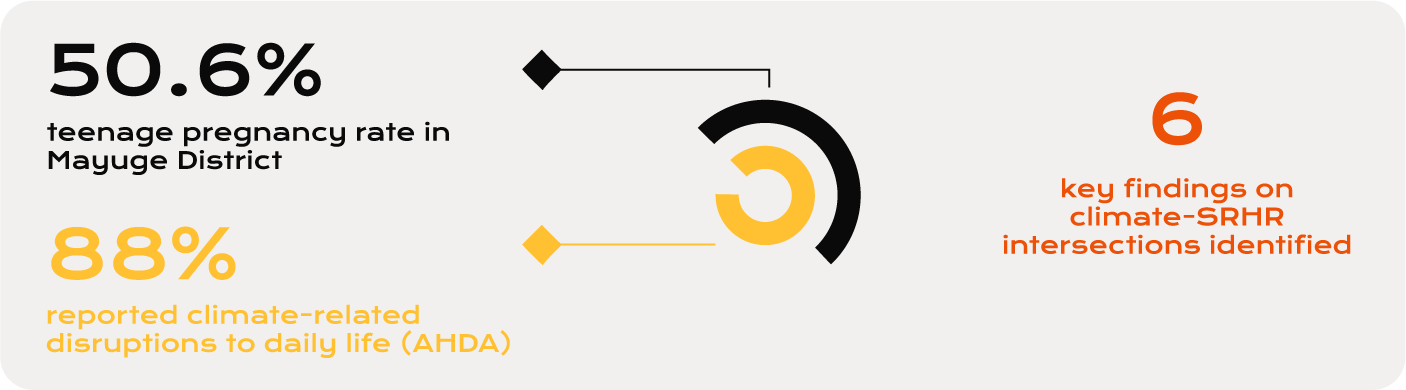
Uganda’s island and shoreline communities along Lake Victoria face escalating climate variability—prolonged heavy rainfall, flooding, and rough waters—that routinely disrupts transport, livelihoods, and access to essential health services. In Mayuge District, adolescent girls and young women (AGYW) aged 15–24 already confront persistent barriers to sexual and reproductive health and rights (SRHR) services, including poverty, long distances to facilities, limited youth-friendly services, and restrictive gender norms. Extreme rainfall compounds these structural challenges, cutting communities off from contraception, antenatal care, and emergency obstetric services.
This mixed-methods study investigated the mental health burden of climate hazards and the coping strategies households employ, with particular attention to the experiences of women, children, and older adults.

Research Methodology

Component
Design
Participants
Location
Study Sites
Timeline
Funding
Details
Qualitative (in-depth interviews)
$10,000 (PERCC/Population Council award)
Notes

AGYW aged 15–24; healthcare workers
Mayuge District, Eastern Uganda
Kityerera and Masolya communities, Mayuge District
Island and shoreline settings along Lake Victoria
See UNFPA announcement for portfolio context
Key Findings
Physical access severely restricted: Flooded roads and rough waters limit travel to health facilities, forcing AGYW to delay or forgo care for contraception, antenatal visits, and emergency obstetric and post-abortion needs
Service provision becomes unreliable: Healthcare worker absenteeism, late arrivals, and cancelled community outreaches during heavy rains leave facilities understaffed and under-resourced when demand is highest.
Economic vulnerability intensifies SRHR risks: Loss of daily income and food insecurity during rainy seasons increase reliance on transactional sex and exposure to gender-based violence, driving higher rates of unintended pregnancy.
Education disruption compounds the cycle: Girls miss school due to flooding, damaged latrines, and poor menstrual hygiene management, further limiting their agency and increasing pregnancy risk.
Hidden burden of sexual violence and unsafe abortion: Sexual violence targeting AGYW—particularly those with disabilities—increases during heavy rains; unsafe abortions rise but are concealed in official health records.
Community coping mechanisms are insufficient: Informal support from boda-boda riders and traditional birth attendants helps bridge gaps but cannot replace formal, reliable SRHR service delivery.
“Sometimes the men tell you, ‘If I take you or give you a place to sleep, you must agree to my sexual request.’ And since you can’t move in the rain, you have no choice. Even using protection becomes hard because there are no condoms during that period.”
— IDI participant, 19 years, Masolya community

Recommendations
1
Integrate SRHR into climate adaptation and emergency preparedness plans at national and district levels, with specific guidance for island and shoreline communities.
2
Strengthen climate-resilient service delivery models, including mobile clinics, boat ambulances, and community-based contraceptive distribution during rainy seasons.
3
Protect and support healthcare workers through improved transport solutions, staff accommodation near facilities, and incentives to maintain service continuity during extreme weather.
4
Invest in AGYW-centered protection measures, including transport vouchers, GBV response services, and youth-friendly outreach tailored to climate shocks.