Access and Utilization of Sexual Reproductive Health Services During Cyclones in Malawi
Zomba District, Malawi
Center for Education, Promotion & Advancement of Rights of Adolescent Mothers (CEPARAM)

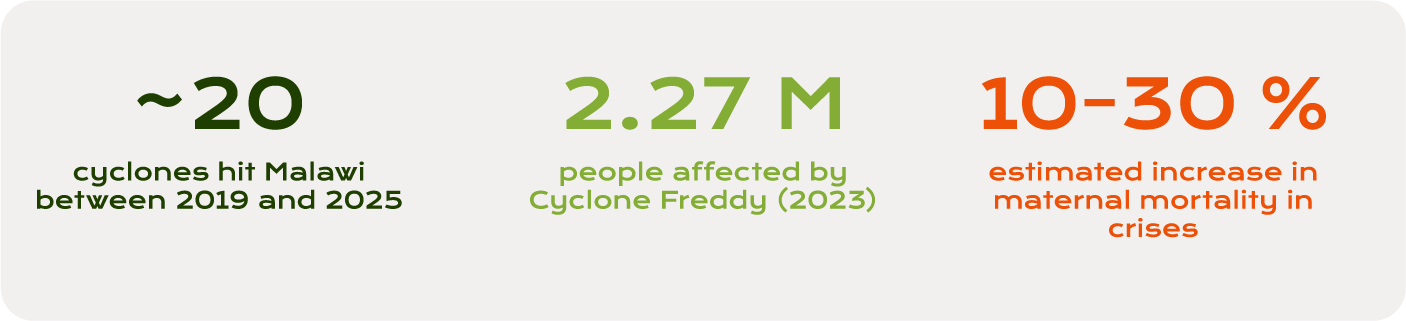
Malawi is among the most climate-vulnerable countries in Southern Africa, experiencing approximately 20 cyclones between 2019 and 2025. Tropical Cyclone Freddy (2023) alone affected 2.27 million people, displaced over 659,000, and caused 679 deaths. In TA Mwambo, Zomba District—repeatedly struck by Cyclones Idai, Ana, Freddy, and Chido—recurrent flooding displaces households, destroys health infrastructure, and severs access to essential SRHR services. Women, adolescents, and persons with disabilities bear disproportionate risks.
This mixed-methods study (96 participants; interviews, FGDs, workshops) examined SRHR service disruptions, MISP implementation gaps, and barriers to access during cyclone emergencies.

Research Methodology

Component
Design
Sample
Location
Timeline
Funding
Details
Mixed methods (interviews, FGDs, community workshops)
Kachulu, TA Mwambo, Zomba District, Malawi
Notes

96 participants
2025
Cyclone-prone communities near Lake Chilwa
PERCC/Population Council award
Part of PERCC case study porfolio

Key Findings
Extreme multi-hazard exposure: All households reported cyclone exposure (100%); 99% experienced salinity intrusion; 87% riverbank erosion. Over 70% rated impacts as high to catastrophic, citing livelihood loss, property damage, and water insecurity.
Pervasive mental health burden: Residents reported PTSD symptoms, anxiety, depression, and insomnia linked to past cyclones (Aila 2009, Amphan 2020). Environmental cues like strong winds trigger renewed panic. Livelihood collapse drives shame, despair, and social withdrawal, particularly among men.
Gendered and age-specific impacts: Women and adolescent girls experience compounded distress from unsafe water collection, reproductive health stigma linked to salinity, and caregiving burdens. Children show fear, behavioural changes, and school dropout.
Near-absence of formal mental health services: Only 1.8% sought professional mental health care. No formal MHPSS services exist at the union level. Mental health is absent from disaster planning, shelters, and primary care.
Strong informal coping, but insufficient: 93.6% relied on family support; 82.6% on faith-based practices. Community mobilisation (embankment reinforcement, coordinated evacuation) provides resilience but cannot replace structured services.
“People found a chance to sleep with girls anyhow during the cyclone because the girls could not say no since they did not have any food.”
-Male religious leader and community key informant, TA Mwambo

Recommendations
1
Train all health workers in Zomba and other high-risk districts on the Minimum Initial Service Package (MISP) for SRHR in emergencies.
2
Pre-position emergency SRHR kits at health facilities in cyclone-prone areas, including TA Mwambo, Likangala, and Kachulu.
3
Upgrade cyclone-prone health facilities with elevated structures and communication equipment to maintain service continuity during floods.
4
Implement district-level SRHR emergency drills, including protocols for evacuation of pregnant women and persons with disabilities.